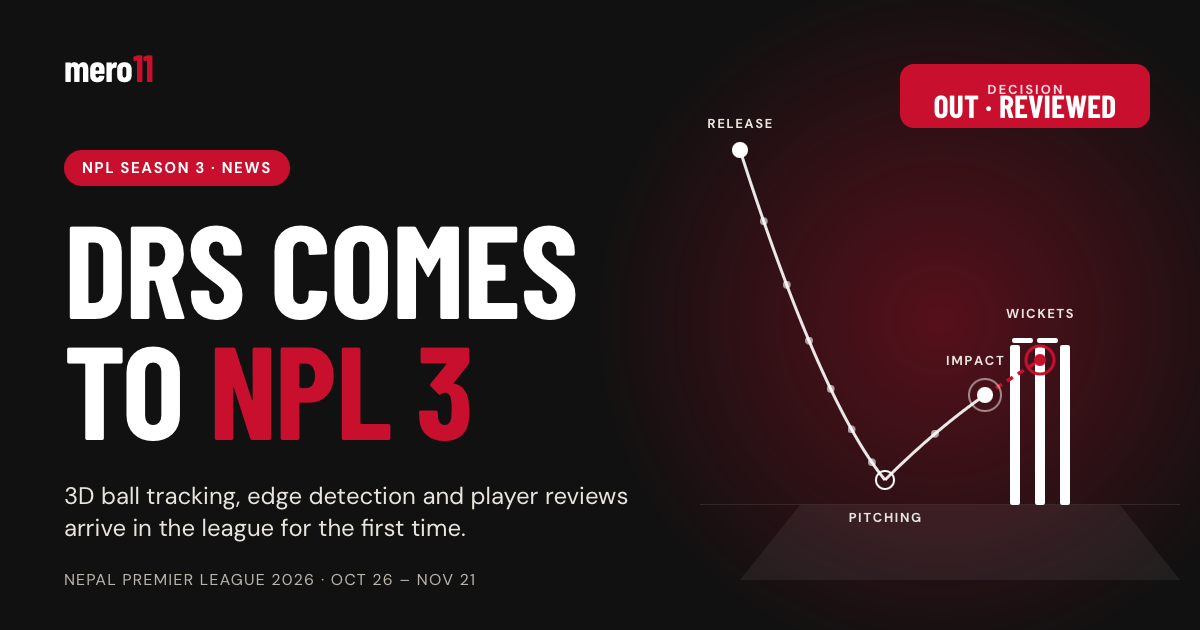
Kathmandu, Oct 20: The Nepal Premier League (NPL) will use the Decision Review System (DRS) for the first time in its third season, the Cricket Association of Nepal (CAN) announced on Tuesday. CAN confirmed the decision through its social media channels. According to CAN, full 3D ball tracking will be used to review leg-before-wicket (LBW) decisions, while run-outs, stumpings and no-balls will also be reviewable. AI-based edge detection will check for contact with the bat, and the system will also provide height-based wides and measurements of the length and height of sixes. CAN sources say the system is expected to be in use from the opening match, with an agreement reportedly signed with an Indian company, and franchises may share part of the cost. NPL 3 runs from October 26 to November 21.
The decision answers a question that has followed the league since it began. Umpiring was questioned during the inaugural season in 2024 and the criticism grew louder in the second, when teams could ask for a review but the league had no formal DRS. Until now, television umpires have checked only run-outs and stumpings, and some decisions stayed disputed even after replays. CAN took time before deciding. Technology trials were completed with two companies, and the final choice depended on an assessment of accuracy.
DRS itself took years to settle in world cricket. Umpires have been able to refer some decisions to the third umpire since 1992, and the player-review system was first tested in a 2008 series between India and Sri Lanka. The International Cricket Council (ICC) officially launched it on 24 November 2009, in the Test between New Zealand and Pakistan at Dunedin, and it reached One Day Internationals in January 2011. The system had critics from the start, and several ball-tracking errors made headlines over the years. The rules improved gradually. From 2017, a team no longer loses a review when the result is “umpire’s call”, so only clear mistakes are overturned. An analysis of more than 2,100 reviews between 2009 and 2017 found that about 26 percent overturned the on-field decision, and the early fear that reviews would increase the number of dismissals did not come true.
For the NPL, DRS could do more than correct decisions. Consistent and visible reviews can give fans, sponsors and broadcasters greater confidence in a league that is still building its reputation. They can also help attract overseas stars who are used to international standards, at a time when David Warner is set to play for Kathmandu Gorkhas and Pokhara Avengers have brought in Shakib Al Hasan and head coach Ajantha Mendis. Broadcasters gain new material as well, from ball-tracking graphics to measurements of how far and how high the sixes travel. How much DRS lifts the league will depend on how accurate and quick it proves in real matches, but the move shows that the NPL is investing in the standards of the international game as it enters its third season.